Classic Solitaire NETFLIX
Netflix, Inc.Card
4.51.41K Reviews
- Version
- 1.2.1.216
- Installs
- 1.00M
- Age Rating
- Everyone
Screenshots
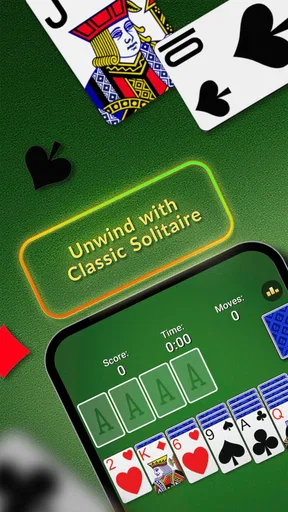
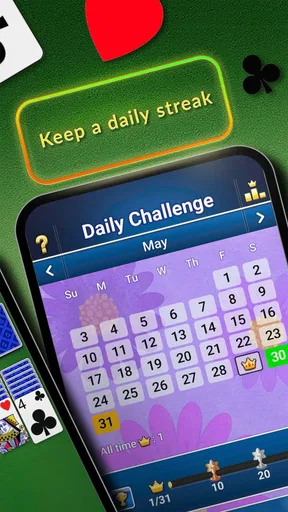
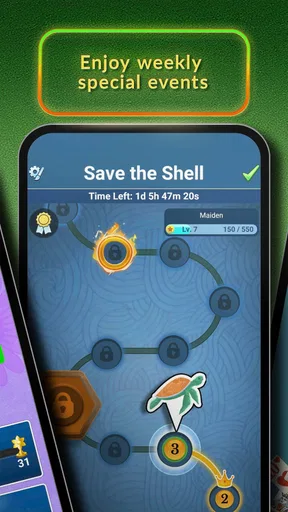
Our Review of Classic Solitaire NETFLIX
 Analysis by Appyee
I approached Classic Solitaire NETFLIX expecting a familiar card game, and that is exactly where its appeal begins. This is a free Klondike solitaire game from Netflix, Inc., built for short sessions rather than dramatic surprises. The rules are immediately recognizable, the screen stays focused on the tableau, and the overall experience is calm enough to use when I want something absorbing without a heavy learning curve.
That simplicity is not a weakness by itself. Solitaire works because the decision space is easy to understand but rarely completely automatic. Every move can open a column, expose a hidden card, or create a useful sequence, and the satisfaction comes from spotting those opportunities before the layout closes in. My impression is that this version is aimed at players who want a clean, dependable card experience more than a large collection of distractions.
The game belongs to the card category and carries an Everyone age rating, so it is an approachable choice for family use or for someone who has never played a digital version. It was released on December 2, 2022, and the current version is 1.2.1.216. It requires Android 10 or later, which is worth checking before installing on an older phone or tablet.
A quiet presentation built around the cards
I find the quiet presentation most useful when I want to play in a setting where sound or visual fuss would get in the way. It also encourages a practical habit: scan the whole tableau before touching a card, so the first move serves a plan rather than mere momentum. That focus makes the look and feel more than decoration; it helps explain why this version suits deliberate, low-pressure play.
The first impression: familiar rules without a noisy entrance
The strongest part of the opening experience is how quickly I can begin playing. There is no need to learn a new fictional setting, memorize character abilities, or understand a progression system before making the first move. The game presents solitaire as the main event, and that directness suits the format. I can pick it up during a brief pause, play thoughtfully for a while, and leave without feeling that I have abandoned a larger campaign.
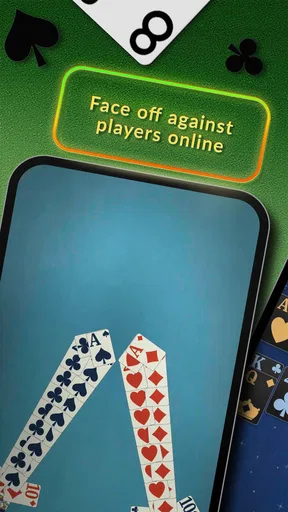
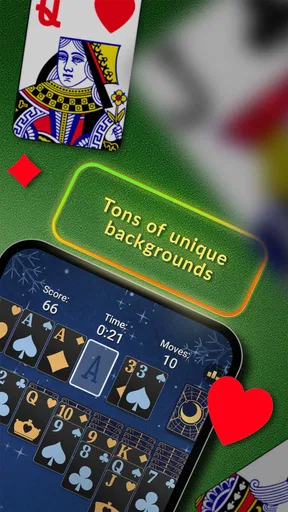
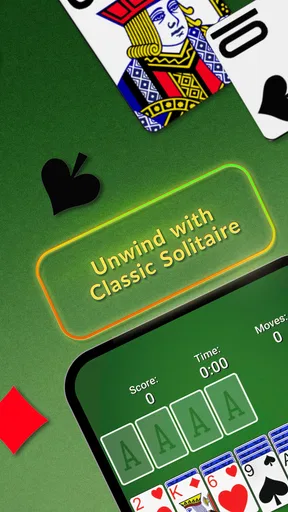
That also means the first impression depends heavily on the quality of the card layout and the clarity of the interface. In a solitaire game, visual confusion is more damaging than in many other genres because the entire challenge depends on reading ranks, suits, colors, and available spaces at a glance. Here, the restrained presentation supports that reading process. The board feels like a workspace rather than a crowded dashboard, which helps me concentrate on the next useful move.
The Netflix branding gives the game a recognizable identity, but it does not turn the cards into a television-style spectacle. That is a sensible choice. A loud presentation would fight against the slow, reflective nature of Klondike. Instead, the visual language keeps attention where it belongs: on the arrangement of the cards and the consequences of moving them.
One practical benefit of this approach is that the game fits different moods. I can play actively, searching several moves ahead, or use it as a gentle way to occupy my hands while taking a break. The same rules support both styles. Players looking for a fast arcade hit may find the opening too subdued, but anyone who enjoys deliberate pattern recognition will understand the appeal quickly.
Art direction and the language of a card table
The art direction works because it does not try to disguise solitaire as something else. The cards remain the visual vocabulary, and the surrounding presentation appears designed to make their relationships easy to follow. That matters more than decorative detail. When I am deciding whether to move a descending red sequence onto a black card, I need immediate visual information, not elaborate scenery competing for attention.
This creates a coherent playable mood: orderly, quiet, and slightly contemplative. The setting is not a narrative world with locations to explore; it is the contained space of a card table. That limitation is actually useful. It gives the game a clear identity and prevents the atmosphere from becoming disconnected from the mechanics.
There is also a subtle trade-off in this kind of design. A traditional solitaire board can feel repetitive because the basic arrangement changes less dramatically than the setting in a puzzle adventure or the battlefield in a strategy game. The reward therefore comes from the changing logic of each hand, not from visual discovery. I would recommend it to someone who values concentration and routine, but not to someone who needs constant audiovisual novelty to stay engaged.
A useful way to play is to treat the board as a set of priorities rather than a collection of isolated moves. I first look for moves that reveal face-down cards, because opening the tableau generally creates more information than simply building a sequence in an already visible column. I also avoid moving a long stack automatically when a smaller move might expose a hidden card or preserve a valuable empty space. That habit makes the presentation feel more interactive: the quiet board rewards careful reading.
Sound and rhythm: why restraint helps
Sound has a different job in a solitaire game than it does in an action game. It should confirm movement and give the session a sense of completion without interrupting thought. The overall mood here is better understood as controlled and unobtrusive than theatrical. I can focus on the arrangement of the tableau instead of waiting for constant audio rewards.
That restraint supports the natural rhythm of Klondike. A hand usually alternates between inspection, a small chain of moves, and a pause while I reconsider the remaining options. The game does not need to force a beat onto that process. When the presentation leaves room for those pauses, the experience feels more like a mental reset than a performance.
This is especially useful in everyday situations. I could imagine playing a hand while waiting for an appointment, during a quiet commute as a passenger, or after finishing work when I want an activity that is more engaging than scrolling but less demanding than a competitive game. The short-session structure makes it easy to stop after a hand rather than being pulled into a long sequence of objectives.
There is a limitation here for players who expect a strong soundtrack or a dramatic sense of place. Solitaire cannot rely on story scenes, character dialogue, or changing environments to create momentum, and this game does not appear to compensate by turning every move into an event. Its pacing is intentionally modest. I see that as a strength for relaxation, but a weakness for anyone who wants the atmosphere to carry the experience on its own.
My advice is to judge the game by the quality of its concentration loop, not by the amount of spectacle it provides. If you enjoy the small rhythm of examining a board, making a safe move, and discovering a new possibility, the quiet presentation is an advantage. If you need music, competition, or visual escalation to maintain interest, a more elaborate card title may suit you better.
Where the mechanics meet the mood
Klondike is simple to describe but not always simple to solve. The visible rules are familiar: build descending sequences in alternating colors, move cards toward their appropriate foundations, and uncover the hidden cards in the tableau. The interesting decisions come from timing. A move that looks productive can remove the only card that another column needs, while a temporary rearrangement can create the opening required to finish the hand.
That makes the game’s calm mood mechanically honest. It does not need artificial urgency because the tension is already present in the layout. I feel pressure when several face-down cards remain and the available moves are narrowing, but it is the quiet pressure of calculation rather than a timer. The presentation gives me room to think, while the rules provide enough consequences to make that thinking meaningful.
One of the most useful habits is to protect empty tableau columns. An empty space can accept a king, and that can unlock an entire sequence, so filling the space merely because a move is available may be shortsighted. I also try to move cards to the foundation with some care instead of treating every eligible card as an automatic improvement. In many hands, keeping a lower card available in the tableau can be more valuable than advancing it immediately.
Another practical insight is to distinguish between information and progress. Revealing a hidden card is often valuable even when it does not immediately send anything to a foundation. Players who focus only on foundation numbers can miss the larger objective: opening the board so that more legal moves become visible. This is where the game rewards patience and gives its familiar rules enough depth for repeated sessions.
The pacing also changes depending on how I approach the hand. I can play quickly when the arrangement is obvious, but rushing becomes costly when several moves compete for the same card. The best rhythm is usually a mixture of commitment and restraint: take clear moves, then stop briefly before using an empty column or moving a long stack. That pause is not wasted time; it is where the strategic value of the layout becomes apparent.
How it compares with ordinary solitaire alternatives
Compared with a basic solitaire app that exists mainly as a utility, this version feels more curated in its presentation. The difference is not necessarily a larger ruleset. It is the sense that the card table, visual treatment, and pacing are intended to form one consistent experience rather than a bare collection of buttons.
Compared with a broader solitaire package containing many variants, the trade-off is focus. Klondike is the central attraction here, so someone who wants Spider, FreeCell, Pyramid, or a rotating menu of unusual formats may prefer another download. A multi-variant app can offer more mechanical variety, while this game is easier to approach when I already know which style of solitaire I want to play.
It also differs from competitive card games because the challenge is primarily against the layout and my own decisions. There is no need to wait for opponents, manage a ranking, or learn a changing metagame. That makes it a better fit for private, low-pressure play. On the other hand, players who enjoy social tension or direct competition will find the experience intentionally solitary.
The free price removes the most obvious barrier to trying it. The game has reached over one million installs, with an average rating of 4.5 from around twenty-six thousand ratings, which suggests that its straightforward approach has found a substantial audience. I would still avoid treating popularity as a guarantee of personal fit: the deciding question is whether a focused Klondike experience is enough variety for you.
Who will enjoy it, and who should skip it
I would recommend this game to someone who wants a familiar card puzzle with a composed presentation, especially if they prefer sessions that can begin and end naturally. It is a good companion for quiet breaks, travel as a passenger, or evenings when I want to exercise attention without committing to a story-driven game. The Everyone rating also makes it a comfortable recommendation for households looking for an accessible card title.
It is less suitable for players who want a large social layer, elaborate progression, or a wide selection of card variants. It may also disappoint anyone who expects every hand to be a guaranteed puzzle with a clever solution. Klondike includes uncertainty and awkward layouts, and part of the experience is deciding how to manage imperfect information. If you dislike replaying a hand or accepting that an early choice can limit later options, the basic format may feel frustrating rather than relaxing.
Device compatibility is another practical consideration. Because the minimum requirement is Android 10, owners of older Android devices should check their operating system before planning around it. For supported devices, the current version, 1.2.1.216, is the one I would look for when checking whether an installation is up to date.
The Netflix connection may also influence the decision. The game is developed by Netflix, Inc., and its identity sits within that company’s entertainment ecosystem, but the actual appeal remains the solitaire board itself. I would choose it for the focused card experience, not because I expect it to behave like a conventional streaming companion or a narrative Netflix production.
Small choices that improve a session
For new players, I suggest beginning with a slower approach: scan every visible card before moving anything, identify which columns contain the most promising hidden cards, and prioritize moves that increase access to the tableau. This prevents the common mistake of making the first legal move simply because it is available. Solitaire often rewards the move that creates future options rather than the move that looks most complete right now.
For experienced players, I find it useful to preserve flexibility. Avoid committing a king to an empty space until you know which sequence benefits most from the opening. Keep track of cards that are temporarily blocking one another, and consider whether a foundation move removes a card you still need for alternating-color construction. These are small decisions, but they turn a routine hand into a genuine planning exercise.
I also recommend setting a personal stopping point. Because the game is so easy to restart, it can fill every spare pause without demanding much attention. That is convenient, but it can also make sessions blur together. Playing one deliberate hand during a break, then putting the phone away, preserves the relaxed mood better than tapping through layouts automatically.
After spending time with it, I see the game’s main success as consistency. The art direction, sound restraint, and unhurried rhythm all support the same purpose: helping me read a Klondike layout and think through its consequences. Nothing feels as though it is trying to overpower the card mechanics, and that coherence is more valuable here than a long list of extras.
The atmosphere verdict
Classic Solitaire NETFLIX is at its best when I want a calm, focused card session that respects the traditional Klondike structure. Its presentation creates a quiet playable mood, while the mechanics supply enough tension to keep familiar rules interesting. The free entry point and accessible age rating make it easy to recommend to casual players, and the established audience shows that the approach works for many people.
My final recommendation is conditional but positive. Choose it if you want a polished-feeling, focused solitaire experience for short breaks and thoughtful repetition. Look elsewhere if you need multiple variants, competitive play, a strong narrative setting, or constant audiovisual stimulation. For the right player, its restraint is not a lack of ambition; it is the reason the cards remain clear, the pacing stays comfortable, and each hand has room to become its own small mental challenge.
Verdict
Strengths of Classic Solitaire NETFLIX
- Ad-free gameplay with no distracting banners or pop-ups.
- Smooth, simple controls make card placement quick and intuitive.
- Multiple solitaire variations add variety beyond standard Klondike.
- Offline play is convenient for travel or areas with weak connections.
- Clean visuals and readable cards suit both phones and tablets.
Limitations of Classic Solitaire NETFLIX
- A Netflix subscription is required to access the game.
- The minimalist presentation may feel too plain for some players.
- Limited social features offer little interaction with other users.
- Random deals can occasionally feel repetitive during longer sessions.
- Some advanced players may want more statistics and customization options.
Other Releases by Netflix, Inc.
View All
Netflix
Entertainment4.8

Sonic Mania Plus - NETFLIX
Action4.5

Bloons TD 6 NETFLIX
Strategy4.6

Football Manager 26 Mobile
Sports4.3
Similar Picks in This Category
View All
Solitaire - Classic Card Games
MobilityWare4.6

UNO!™
Mattel163 Limited4.3

Spider Solitaire: Card Games
MobilityWare4.6

Solitaire.com - Classic Cards
Tripledot Studios Limited4.7

Plants vs. Zombies™ Heroes
ELECTRONIC ARTS4.1

Hearthstone
Blizzard Entertainment, Inc.4.1
Frequently Asked Questions
What is Classic Solitaire NETFLIX?
Classic Solitaire NETFLIX is a digital version of the traditional Klondike solitaire card game, offered as part of the Netflix Games catalog. It focuses on the familiar single-player experience, with card-drawing, tableau-building, and foundation-stacking rules that are easy to learn. The game is designed for relaxed play and short sessions, while still providing enough challenge for players who enjoy improving their strategy and completion time.
Do I need a Netflix subscription to play Classic Solitaire NETFLIX?
Yes, access generally requires an active Netflix membership because the game is included with Netflix Games. You typically sign in through the Netflix app or with your Netflix account before downloading or launching it. There are no separate in-game purchases or advertisements associated with the Netflix Games version, but availability and account requirements may vary depending on your country, device, subscription status, and Netflix’s current service policies.
Can I play Classic Solitaire NETFLIX offline?
Classic Solitaire NETFLIX is intended to support convenient play, including situations where you may not have a constant internet connection. However, you may need to connect to the internet initially to download the game, authenticate your Netflix account, or complete periodic account checks. Offline access can also depend on your device and app version, so it is sensible to launch the game online before traveling or playing without mobile data.
Does Classic Solitaire NETFLIX include ads or additional purchases?
One of the main advantages of Classic Solitaire NETFLIX is that the experience is presented without the advertising interruptions commonly found in free solitaire apps. The game is included with an eligible Netflix subscription and is not normally built around buying coins, hints, extra lives, or cosmetic items. This makes it a cleaner option for players who want straightforward card gameplay, although a Netflix subscription is still required.
Is Classic Solitaire NETFLIX suitable for beginners?
Yes, the game is suitable for beginners because it uses the recognizable Klondike solitaire format and provides a relatively simple objective: organize cards in sequence and suit from ace through king. Players familiar with classic solitaire should feel comfortable immediately, while newcomers can learn through regular play. The main challenge comes from planning moves carefully, managing the stock and tableau, and recognizing when a deal may require a different strategy.
Play our best games!


